Messaging with delivery state
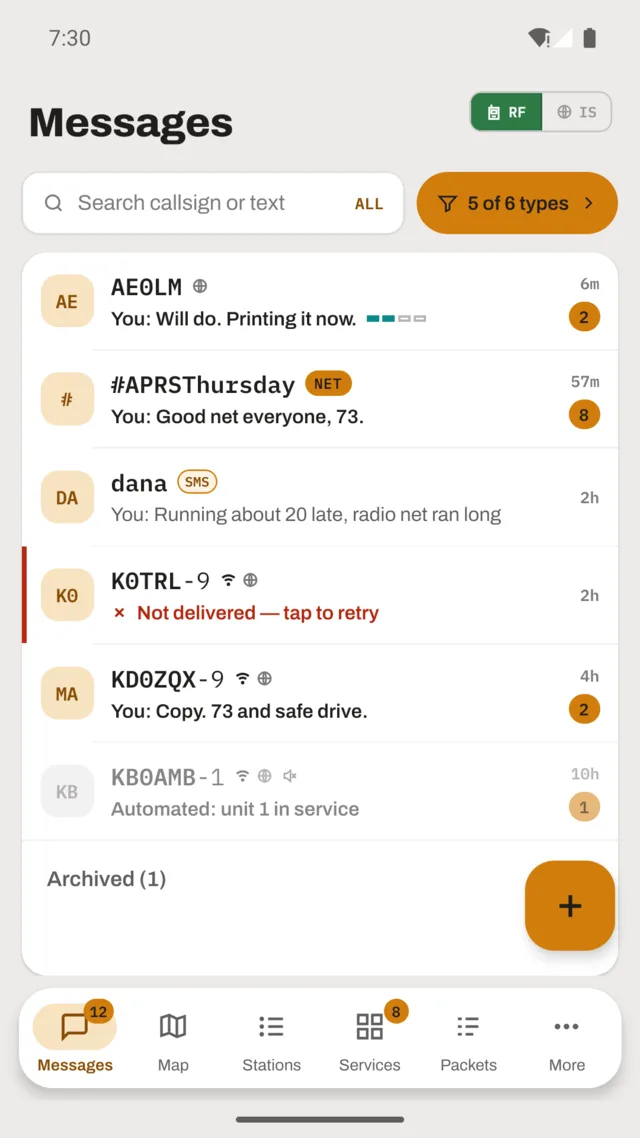
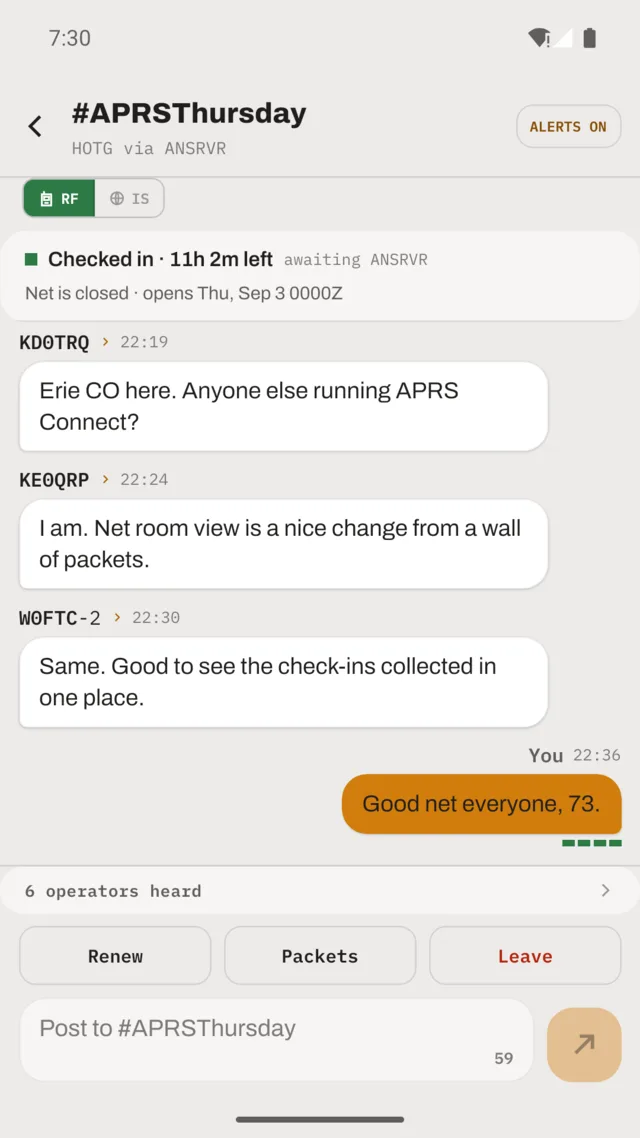
One thread per station, in order, kept. Every message shows where it actually
got to (sent, acknowledged, retrying, or given up on) and retries on its own,
on a schedule you can change, rather than leaving you to guess and re-send. With Pro, a message that has run
out of retries can wait for its station instead and go out again the next time
that callsign is heard, up to three tries over two weeks.
APRS services as guided screens
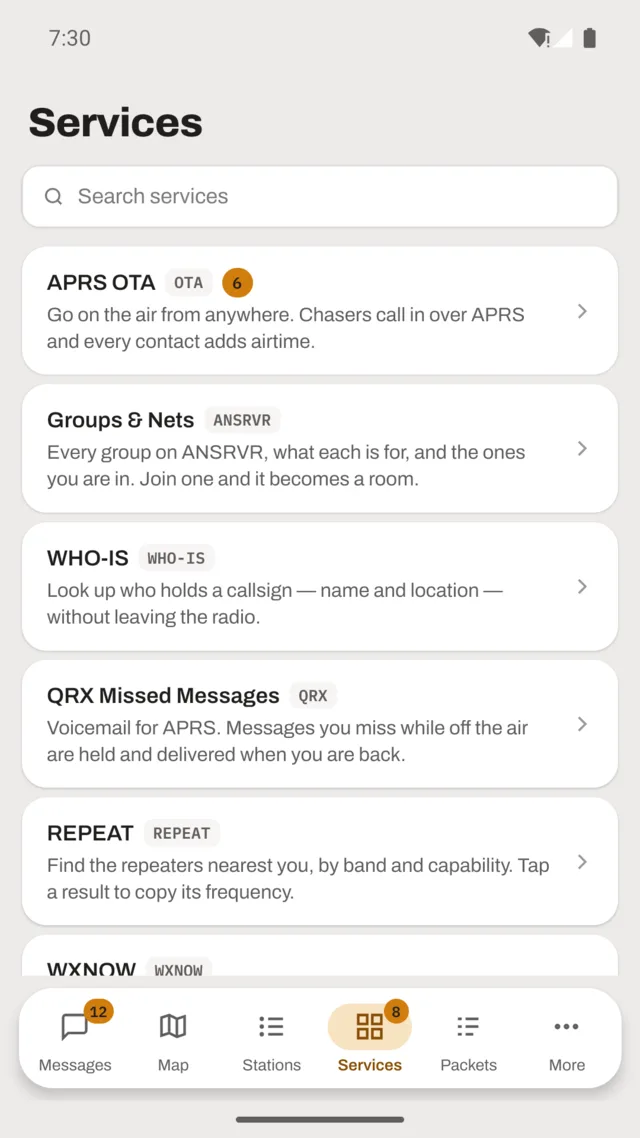
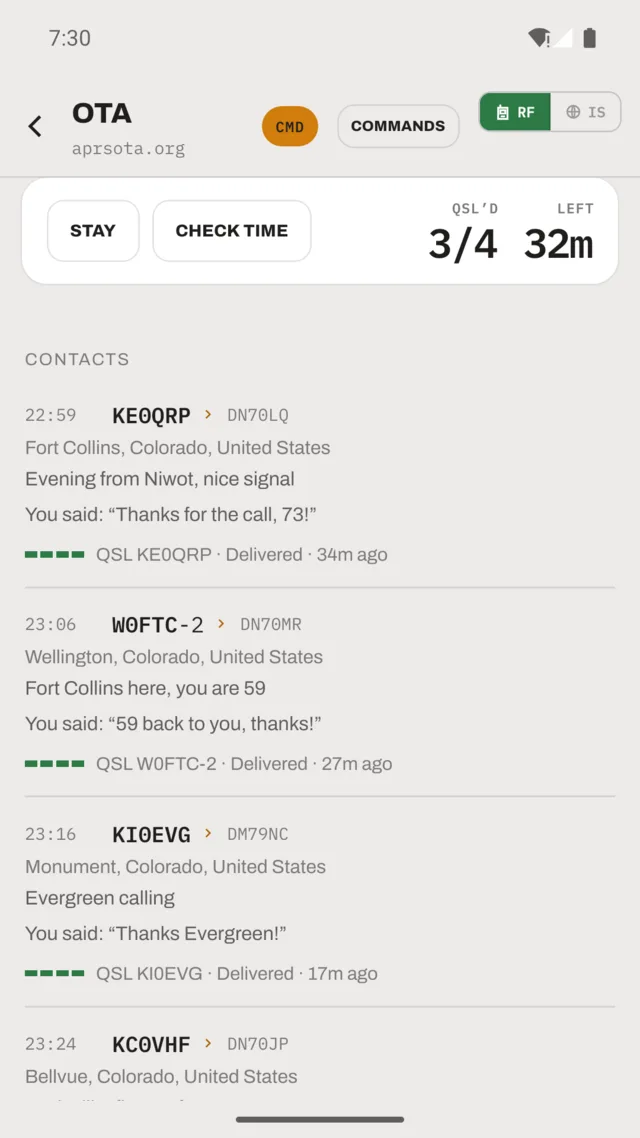
Much of what answers on APRS is automated: weather forecasts, group nets,
SMS and email gateways, Winlink, callsign lookup. These bots expect exact
wording. APRS Connect keeps a directory of them, explains what each one
answers, and composes the message for you. The outgoing command is always
shown before it is sent, and you can always type it yourself instead.
Radio or internet
KISS TNCs over Bluetooth Classic, BLE, USB serial, and TCP; a built-in AFSK
audio modem that needs no TNC at all; and APRS-IS over the network, with a
filter you control. Several can run at once, as named channels. Reception keeps
running in the background behind a notification you can see, and the log marks
the gaps when it couldn't. APRS-IS is free; the radio channels are APRS
Connect Pro.
A vector map that works offline
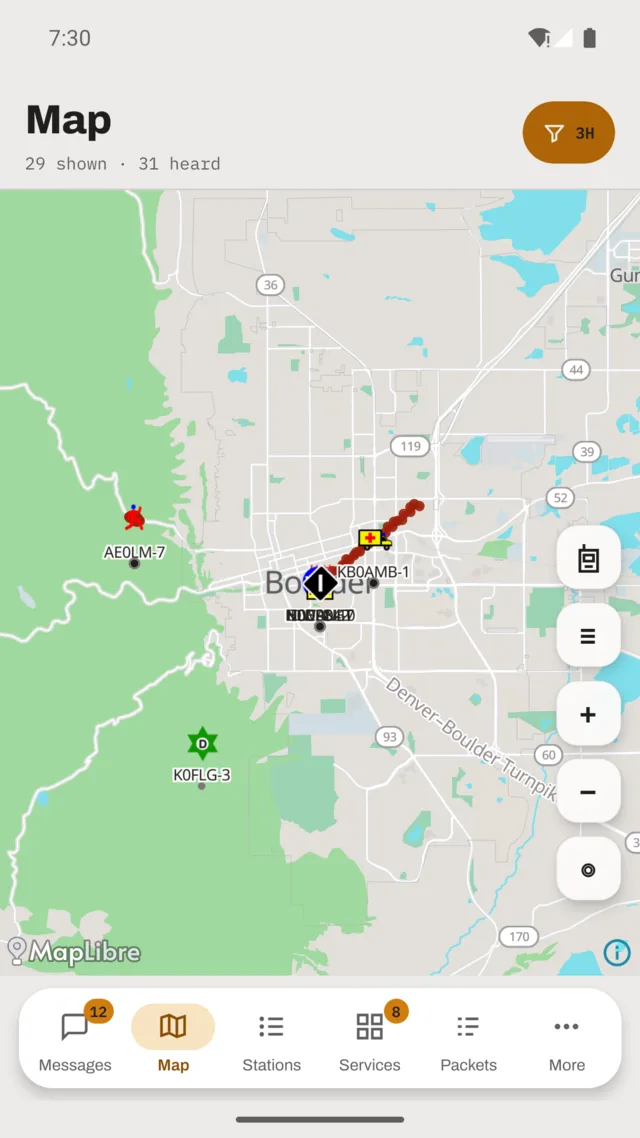
Stations, objects and beacons plot with their real APRS symbols on a vector
basemap served from our own tile host. Every tile you have viewed is cached on
the phone, up to a size you set, and redraws with no connection. With Pro,
download whole regions ahead of a trip, or add a map file of your own, and the
area draws in full with no signal at all. With Pro, the map can also show the
rest of the world: stations heard anywhere on APRS-IS, not only the ones your
own device heard.
One station, all your devices
An optional account ties your phone, tablet and browser together. With Pro,
your messages, threads, blocklist, coverage and settings stay
the same on every one of them, updating live while the app is open. Where two
devices share a callsign and SSID, only one of them beacons, acks and digipeats
at a time, so your station does not jump around the map.
Free over APRS-IS, Pro for the rest
Messaging, services, nets, the map, stations and the packet log are free to use
over the internet backbone. APRS Connect Pro switches on the radio channels,
offline region downloads, the radar layer, GPX and KML track export, extra
beacon profiles, capture replay, retry when heard, mobiles nearby, the digipeater
coverage map, and running the phone as an IGate or digipeater. Let it lapse and
nothing is deleted; APRS-IS stays connected.
Nine languages
English, German, Spanish, French, Italian, Japanese, Brazilian Portuguese, Turkish and Malay,
on every screen. The app follows the phone's language, or you pin one. Protocol
words stay in English so what you quote to another operator reads the same on
their screen.
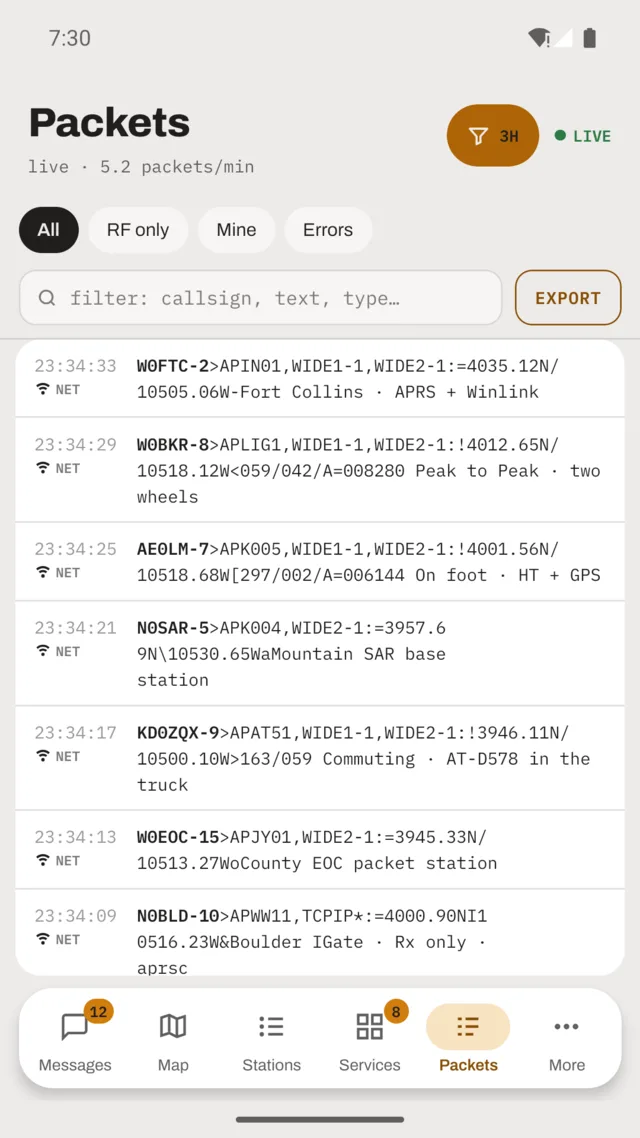
A full packet log
Every frame you hear is kept and decoded field by field (path, symbol,
telemetry and the rest), so you can tell a bad digipeat from a bad antenna.
Reception charts show what you heard, and just as usefully, when you heard
nothing at all.
Local-first storage and backup
Everything lives in a database on the phone, so the app stays fully usable with
no connection at all: your messages, your packet history, your map. Back the
whole lot up to a JSON file and restore or merge it later.