What is APRS?
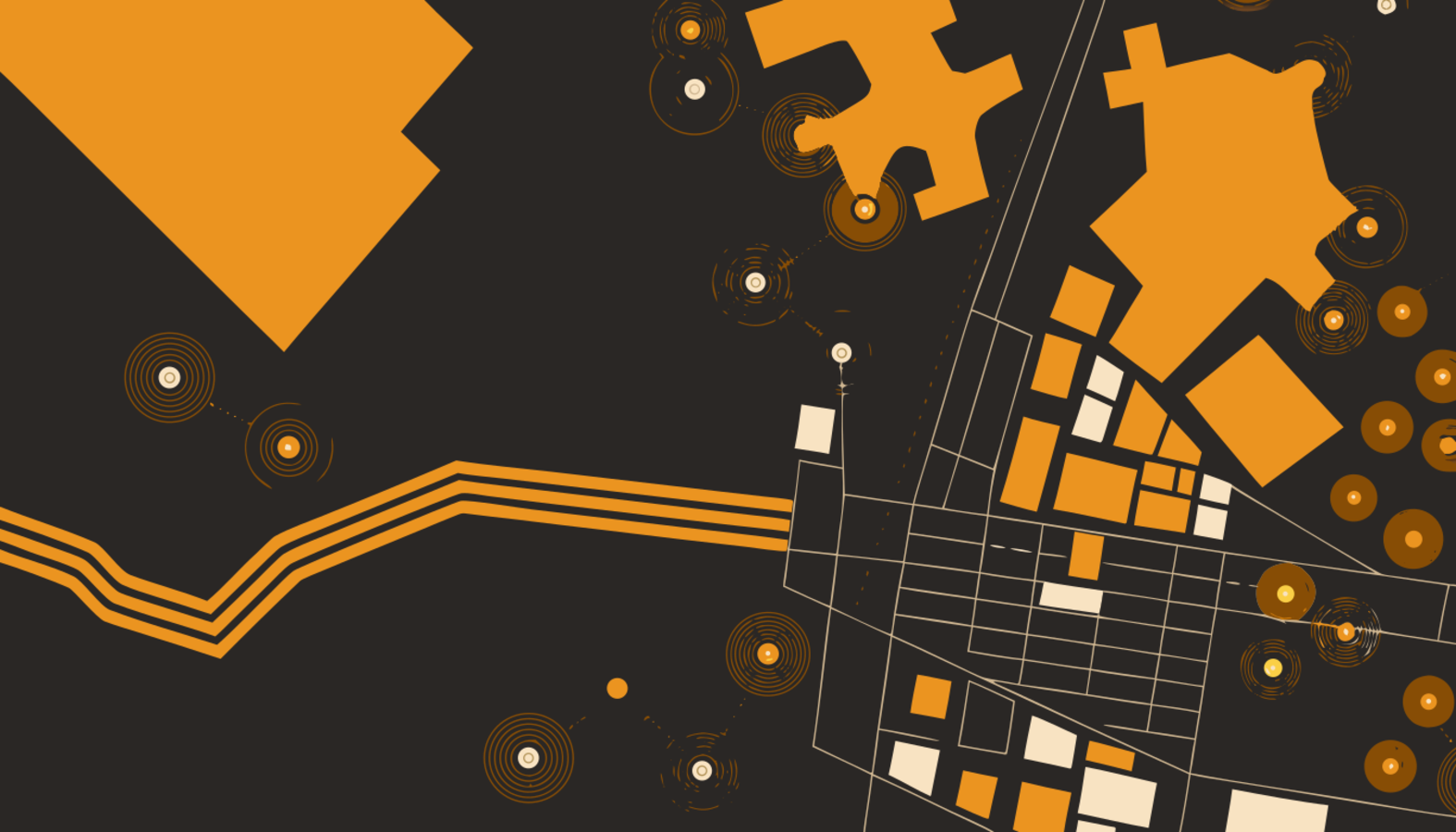
APRS — the Automatic Packet Reporting System — is a data network that runs over amateur radio. Stations transmit short packets: where they are, a line of text to another station, a weather reading. Everyone nearby hears them, some stations repeat them onward, and the result is a live, shared picture of who is on the air and where. It has run continuously since the 1990s, and it works with no phone network and no internet.
What travels over it
- Position beacons — a station's coordinates and symbol, sent periodically. This is what puts moving stations on everyone's map.
- Messages — short text between callsigns, radio to radio, with acknowledgements.
- Weather — home weather stations report temperature, wind, and rain into the same network.
- Services — automated stations answer messages with weather forecasts, callsign lookups, even relays to SMS and email.
How a packet gets around
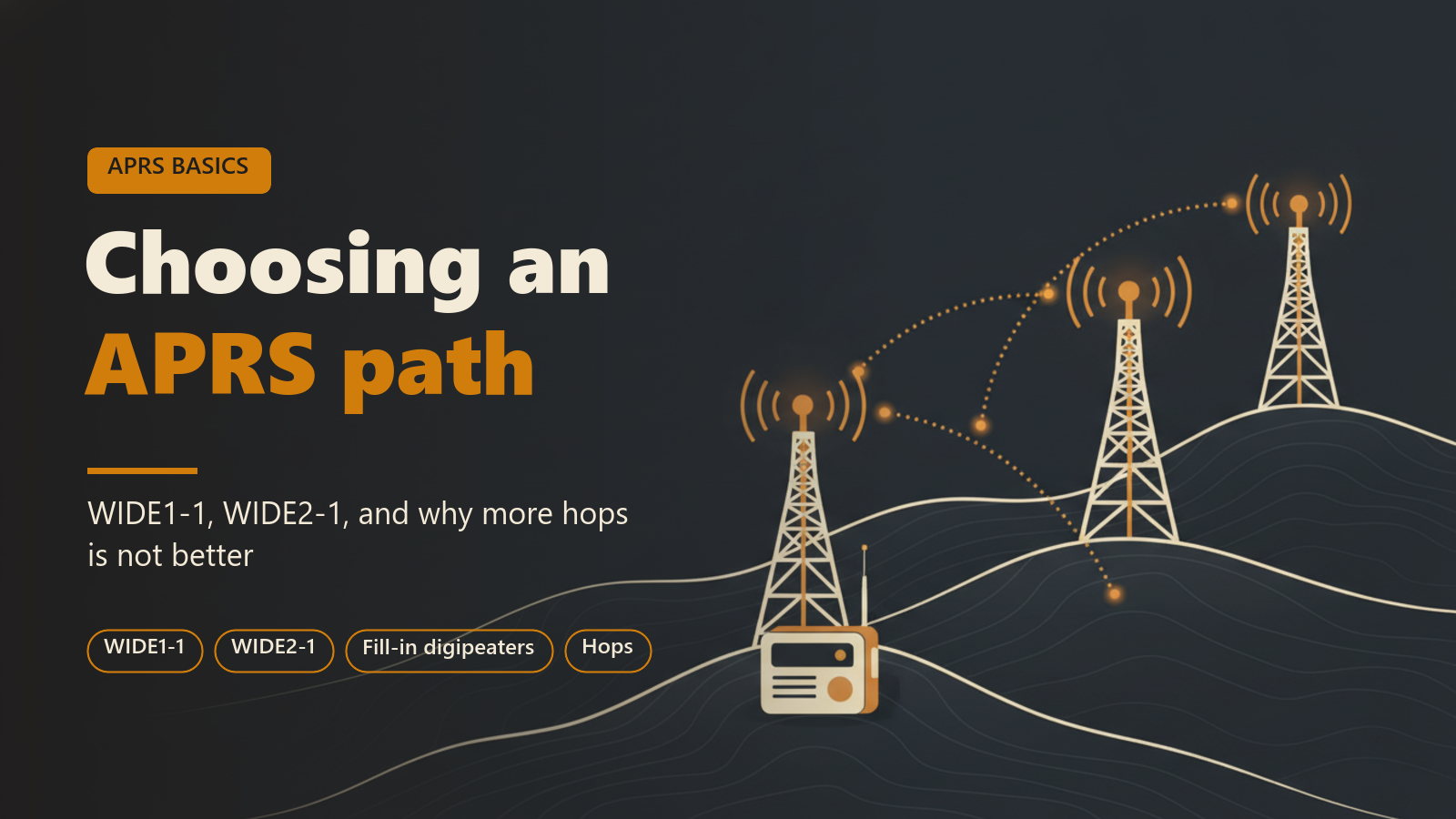
On VHF, packets share one frequency per region — 144.390 MHz in North America. A handheld radio might reach a few miles on its own; what extends it is the digipeater: a relay, usually on a ridge or a tower, that hears a packet and repeats it at higher power. One hop through a well-placed digipeater can cover a county.
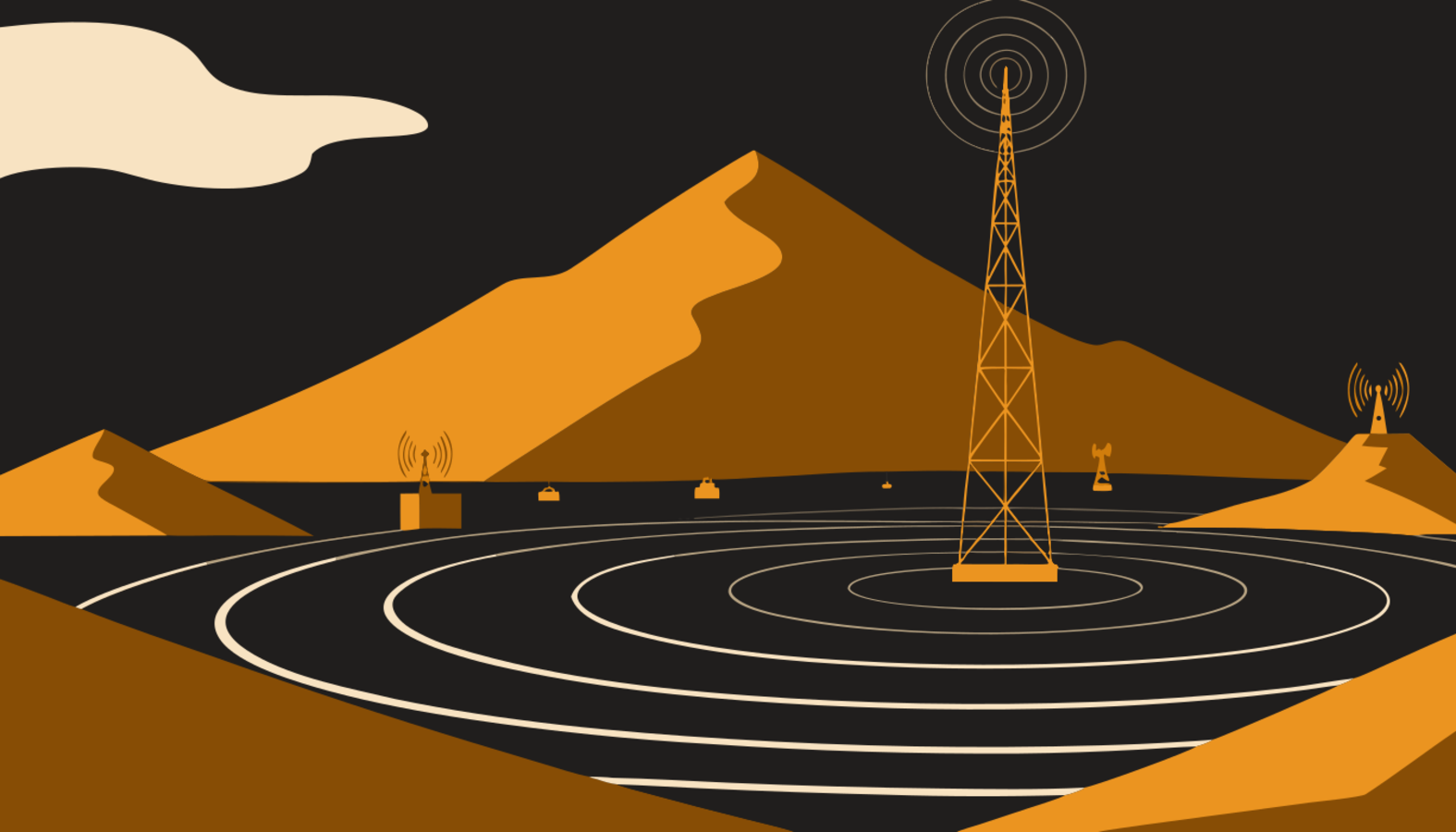
Alongside the radios there is an internet backbone, APRS-IS. Gateway stations called igates bridge the two: what they hear on RF is fed into APRS-IS, which is how a beacon transmitted from a trail ends up viewable on websites like aprs.fi seconds later. The bridge works in both directions — a message sent over the internet can reach a station that only has a radio.
Do you need a licence?
To transmit, yes — APRS lives on amateur radio spectrum, and transmitting there requires an amateur radio licence in essentially every country. Listening does not: you can connect to APRS-IS receive-only and watch the whole thing work before you ever sit an exam. In most countries the entry-level licence is a study guide and one test away.
Where APRS Connect fits
APRS Connect is an APRS client for Android: the map, messaging as conversation threads with delivery states, the service bots as guided screens, and connections to real radios over Bluetooth, USB, or an audio cable — or to APRS-IS over the internet, including receive-only. The getting started guide goes from install to hearing your first traffic, no radio required.