
Blog
-
The APRS-IS passcode, and what receive-only means
What the APRS-IS passcode is, what a login can do without one, and how APRS Connect handles the passcode, receive-only mode, filters and server regions.
-
How often an APRS station should beacon
Beacon rates for fixed, walking and mobile APRS stations, how smart beaconing works, and where the timing settings are in APRS Connect.
-
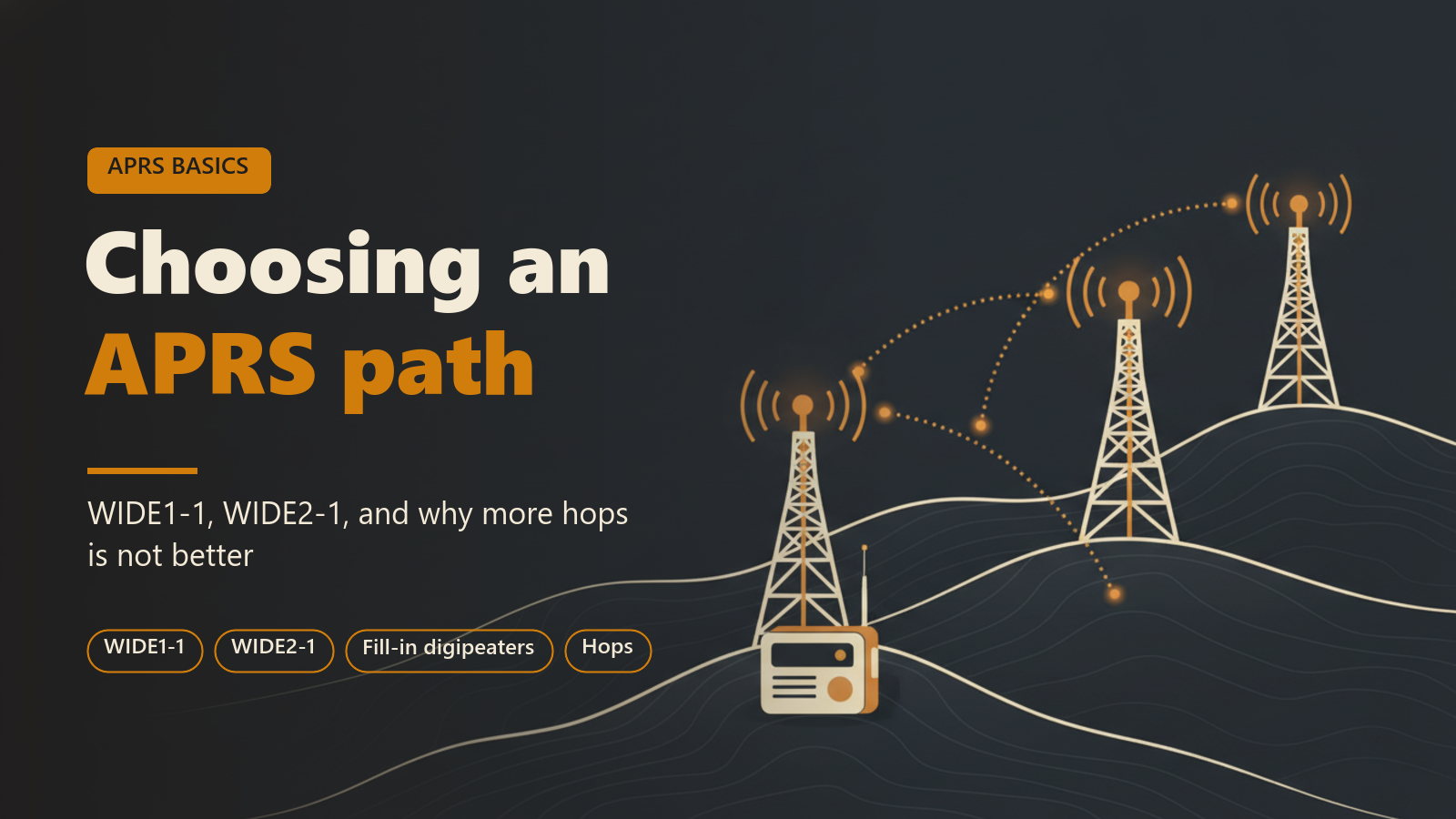
WIDE1-1, WIDE2-1: choosing an APRS path
What an APRS digipeater path is, what WIDE1-1 and WIDE2-1 ask for, which path suits a mobile or a fixed station, and where APRS Connect shows it.
-
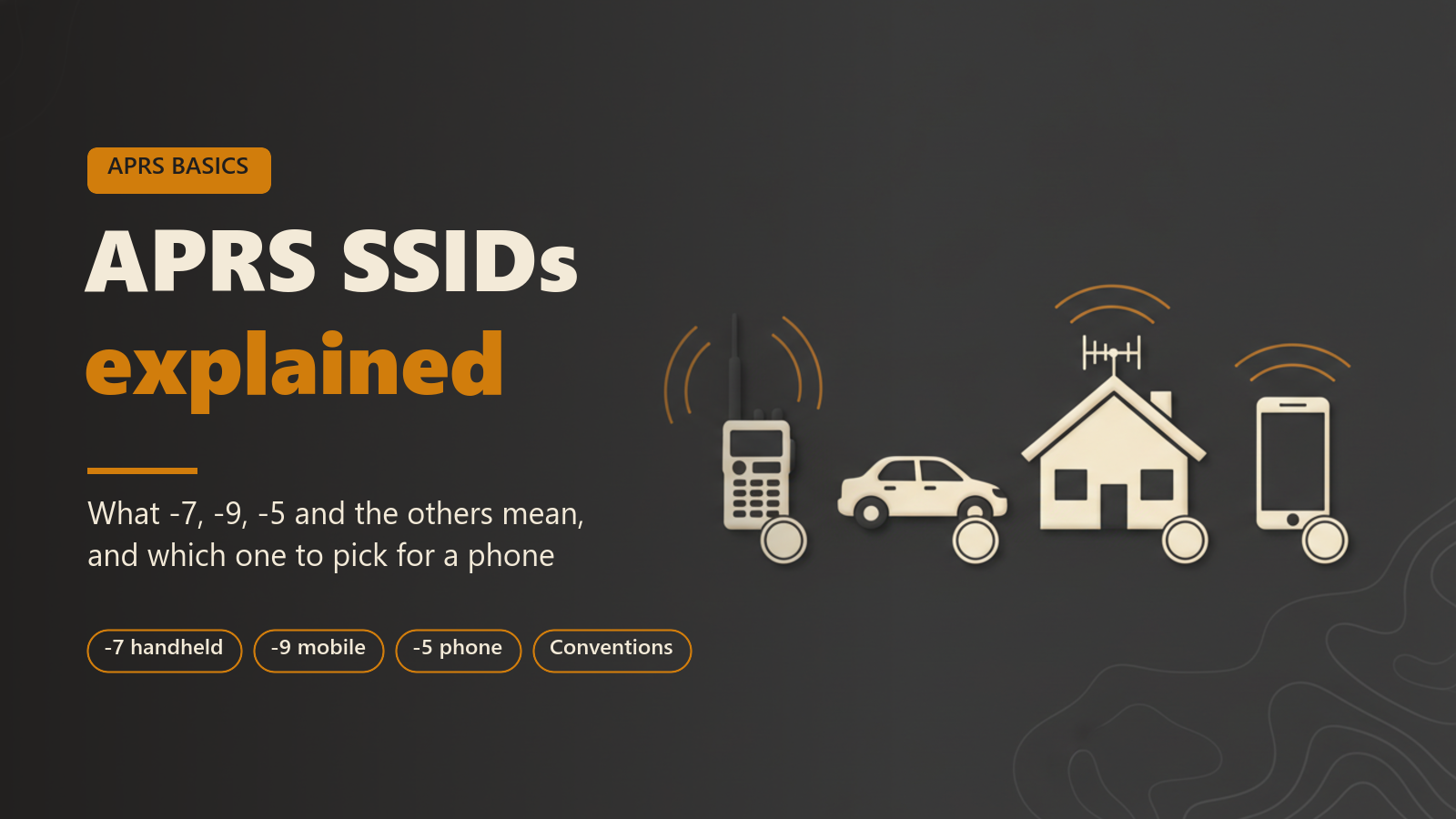
APRS SSIDs explained: what -7, -9, -5 and the others mean
What the number after the dash in an APRS callsign means, the conventional use of each SSID from -0 to -15, and how to choose one for a phone.
-
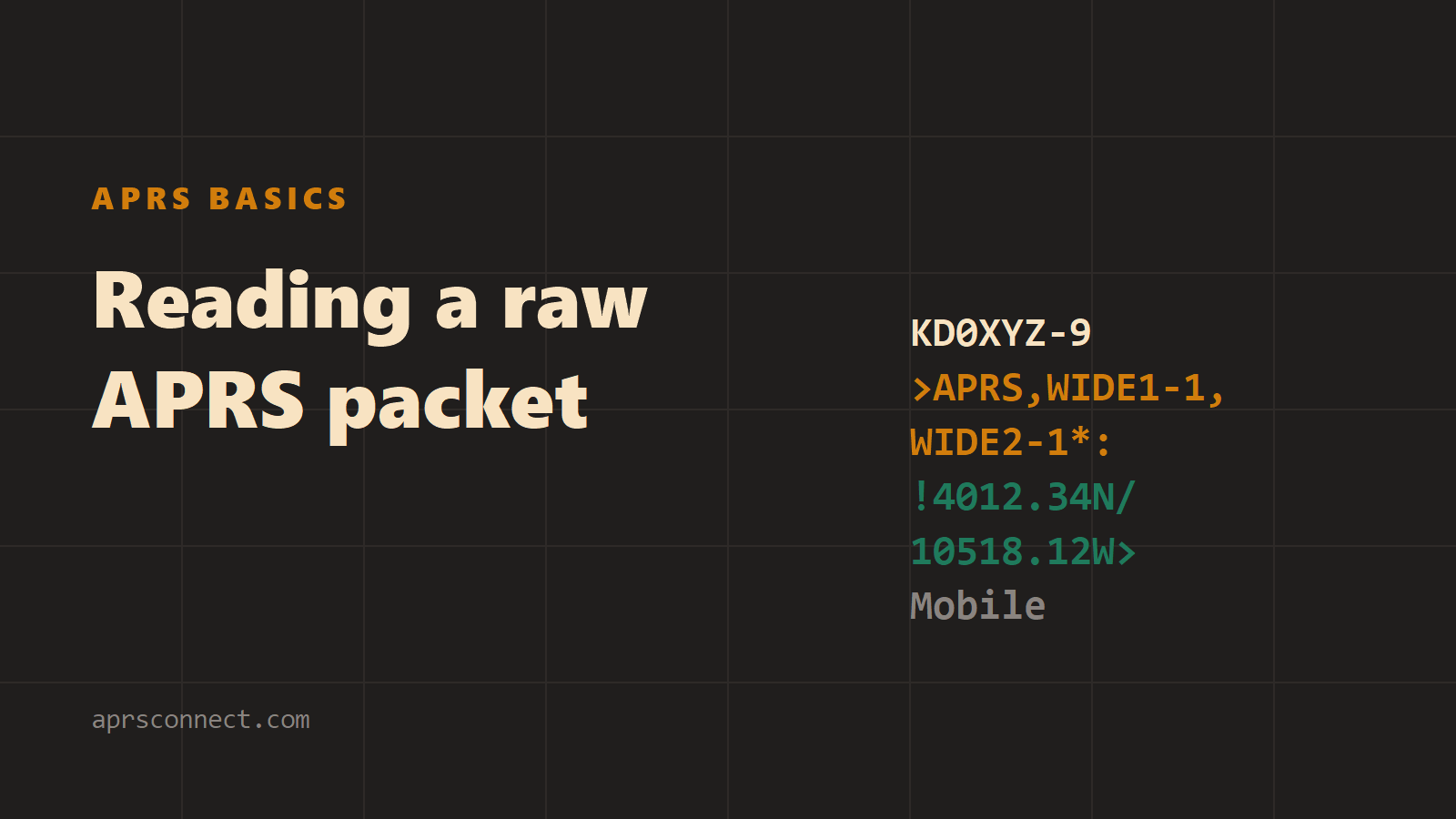
Reading a raw APRS packet
A position packet and a message packet taken apart field by field, then the same packet as the APRS Connect packet inspector shows it.
-
What happens after you press Send on an APRS message
How an APRS message travels, what the six delivery states in APRS Connect mean, the retry schedule, and how to read the message detail timeline.
-

What is APRS?
The Automatic Packet Reporting System is a live data network run over amateur radio: position beacons, messages, and weather, relayed by digipeaters and bridged to the internet. Here is how it fits together.